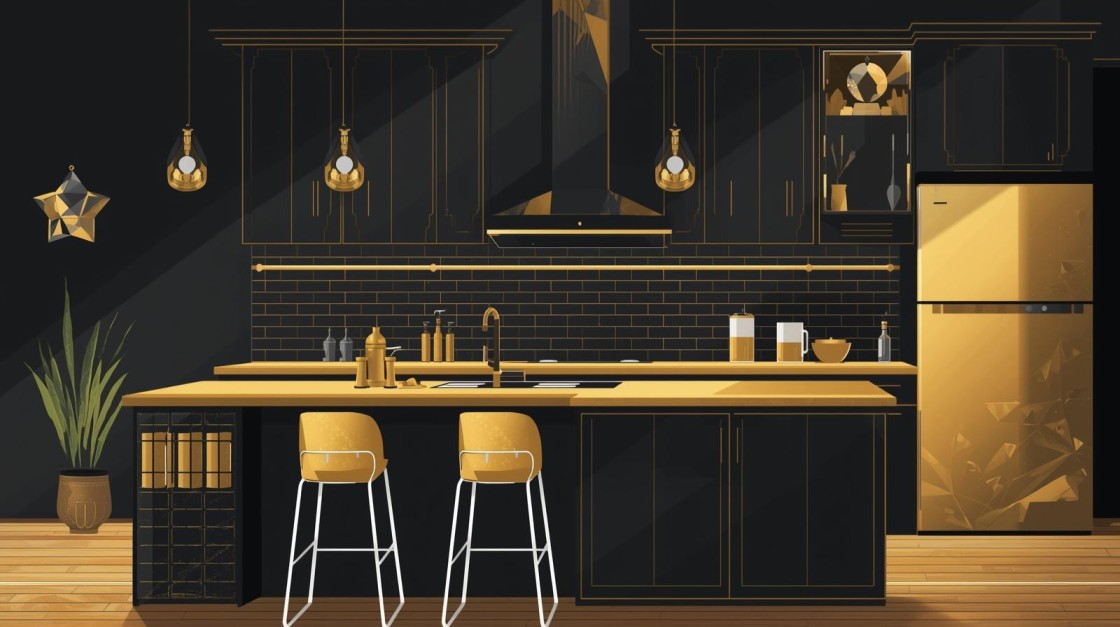
Every Bangalore home has a kitchen as its centrepiece and it is more than just a kitchen; it has also become a community centre, an office, and a reflection of a person’s lifestyle prospective. More than ever, the need for modern, functional and technologically advanced modular kitchens will continue to grow in the next few years as Bengaluru, known as the Silicon Valley of India, is one of the fastest-growing cities in India.
Nonetheless, for residents of areas such as Whitefield, Indiranagar and Jayanagar to bring their visions of decorating their living space to fruition, the biggest obstacle is determining the cost of their futures.
To estimate what your costs may be in 2026, you need to look at existing trends and project potential changes based upon those trends. While the cost of living has always gone up with inflation, the most significant factor that affects the total cost of your modular kitchen will be your design decisions. The range of prices for a modular kitchen in Bengaluru can range from ₹2.5 Lakhs for an entry-level kitchen to being extremely lavish with a budget up to 20 Lakhs or more.
This guide will discuss all the major components of your modular kitchen design for the Bengaluru marketplace in 2026.

- The Blueprint: Size and Layout Define the Baseline
The size of your kitchen project will have a huge impact on its cost – for instance, the cost of a tiny kitchenette in a one-bedroom apartment in Koramangala will be much lower than a large gourmet chef’s kitchen located in a large house in Sarjapur.
Price is also determined by the amount of cabinetry you are purchasing; because modular kitchen cabinetry is sold by square footage (in other words, the more cabinet spaces you buy, the more you will pay for your kitchen), the cost becomes higher as the kitchen area increases.
The layout of your kitchen can also affect the price of your kitchen project. If your kitchen has a straight or parallel configuration (as in a three-wall kitchen), it is typically the least expensive to build because it uses the simplest type of cabinetry.
In contrast, L-shaped and U-shaped kitchen layouts often require specialised corner units (such as carousels) to maximise available storage space, which will increase the costs associated with hardware.
An island configuration for your kitchen is the most expensive option when building your modular kitchen; in addition to increasing the size of your kitchen area and providing more countertop and storage space, an island also generally requires additional plumbing and electricity to install sinks and hobs because of its size. This increases the average modular kitchen cost by approximately 20% in 2026.

The Core Material: What Lies Beneath:
Because of the extreme fluctuations in temperature and humidity that occur in Bangalore, it’s important that you select the correct ‘core’ material inside your cabinetry to give it the longest life possible.
Boiling Water Proof (BWP) Plywood is the premier choice for areas that will have moisture such as a sink cabinet. While it is extremely durable and offers protection against moisture and termites, it also continues to be the most expensive material you can use for cabinetry and so by 2026 will remain as the preferred choice.
Boiling Water Resistant (BWR) Plywood or Moisture Resistant (MR) Plywood falls into the mid-range category and will be an acceptable choice for upper cabinets and other drier areas of the kitchen.
High-Density High Moisture Resistant (HDHMR) Board is starting to emerge as a strong candidate to be one of the top materials used for cabinetry in 2026 and beyond. In addition to having excellent screw holding capabilities, it also has superior moisture resistance and is priced slightly less than premium plywood.
Particle Board and Medium Density Fiberboard (MDF) provides the most cost-effective materials for cabinetry, although you can use them to build shutters in dry areas. However, unless you’re creating a core structure for your cabinetry, it is not recommended to use them in the Indian market due to poor water resistance. By selecting your complete cabinetry from the premium BWP Plywood versus the low-end MDF, you can easily see a swing in cost of 30-40%.

The Aesthetic Finish: The Visible Price Tag
The outer appearance of your shutters is visible to your visitors and is a significant variable in terms of pricing.
Laminates – The reliable choice for an Indian kitchen; Laminates offer durability against scratches, thousands of colors/textures (matte, gloss, textured wood), and are relatively inexpensive. In 2026, you can expect to continue to get great value from high-pressure laminates for your money.
Acrylic – If you want a shiny, mirror-like finish, then acrylic is the way to go. Acrylic offers superior durability to laminate against scratching, but will cost you significantly more. It is a fingerprint-magnet and requires more upkeep to keep clean.
PU (Polyurethane) Paint – A premium finish that is designed to be highly customizable and offers a seamless, sleek look in either matte or high-gloss finishes. PU paints require a great deal of labor to apply and will elevate the pricing of the project into the luxury range.
Veneer – A veneer is a thin layer of real wood that has been glued onto a piece of plywood. Veneers can provide a wealth of real wood appeal and are stunningly beautiful, but will cost you substantially more than laminates and require a great deal of maintenance (polishing) over time.

The Hardware and Accessories: The “Hidden” Costs
Unexpectedly, this is often where budgets become severely overstretched. By 2026, homeowners will place considerably more emphasis on ergonomic design and operational convenience, which means that standard hinged doors (and the supporting hardware) will not meet their needs.
Drawer Systems vs. Shelves – Ergonomically, drawers are more practical for use than deep shelves, but they typically require more expensive runner systems.
Brand Naming – Selecting high-quality brands of hardware from Germany or Austria (i.e.: Hettich, Blum, Hafele) allows for the installation of soft-closing drawers and lift-up shutters to last for a minimum of ten years. In contrast, using a no-name brand hardware may reduce your hardware cost by about 50% in comparison to premium brands. However, the reduction in quality may cause drawer or shutter operations to be less smooth and have a shorter lifespan.
Specialized Units – Units such as tall pantry units, pull-out bottle organizers, spice racks, and ‘S’ carousel type corner solutions provide excellent utility, but at significant unit cost.

Countertops and Backsplashes
The days when granite was the only countertop option are over. Granite is still an excellent practical, durable and reasonably priced countertop material found in Bangalore – especially for the locally sourced varieties of granite.
Quartz (engineered stone) has taken the title as “Most Popular Countertop Material” for kitchens. Quartz does not require sealing (it doesn’t absorb liquids) like most types of granite. Quartz can be found in beautiful marble-like patterns which match almost every decor. By 2026, we expect that almost all mid and high end homes will have quartz countertops at prices that are much higher than that of basic granite countertops.
Large Format Porcelain Tiles/Sintered Stone has emerged as another premium, highly durable and highly popular countertop material. These tiles can create a streamlined look on your countertop and backsplash, with almost no visible grout lines.
The 2026 Factor: Appliances and Smart Integration

The 2026 Factor: Appliances and Smart Integration
The kitchen of today includes more than just cabinets; it also contains many new or modern technology products added into the kitchen.
As of 2026, many new luxury apartments built in Bangalore will have smart kitchens to better assist their residents.
Integrated appliances such as built-in ovens, microwaves, and dishwashers provide a flush finish when placed in cabinetry, however, because they are custom-made, the price of integrated appliance installation can be significantly higher than for traditional freestanding appliance installations.
Smart technology, such as Wi-Fi-enabled refrigerators, voice-activated tap controls, under cabinet lighting that can be controlled by an app, Bluetooth-enabled automated chimneys, will add an additional “tech premium” to the overall cost of a smart kitchen installation.

Bangalore’s Labor & Logistics Context
When it comes to location, it also matters in Bangalore. The real estate explosion in Bangalore has resulted in an increased demand for skilled labor (installers, carpenters) and raised the cost of labor in Bangalore as compared to tier 2 cities.
Additionally, the high traffic in Bangalore has created an additional minor overhead when it comes to transportation logistics with timber delivery.
Projected 2026 Budgets
Using the above assumptions and anticipated inflation (5-7% a year on materials), the table below shows the estimated budget ranges for building a standard size (approx. 100-120 sq. ft.) modular kitchen in Bangalore in 2026:
Essentials Tier – INR 3 Lakh – 5 Lakh
- Basic or Straight layout with a simple L-shape.
- Basic Carcass manufactured from MR Ply/H-DHMR with Laminate Finish Shutters.
- Basic Granite Countertop.
- Basic hardware including soft-close hinges, and minimal use of Organizers like wire baskets.
Modern Mid-Range Tier – INR 6 Lakh – 10 Lakh
- L shape or U shape configuration.
- BWP Ply timber carcass for wet areas, and H-DHMR carcass for general use, and High Gloss Laminate and/or basic acrylic finish.
- Entry level quartz as the counter top.
- Hardware that includes branded soft close Tandem boxes and possibly specialized Tall Units or corner solutions.
Premium Luxury Tier – INR 12 Lakh+.
- The Ultimate U shaped design with the inclusion of an Island.
- Full carcass built from BWP Ply and pristine quality Acrylic, PU painted timber or Veneer finishes.
- Premium Quartz or Premium Sintered Stone Countertops.

A modular kitchen in Bangalore in 2026 is a compilation of its components. You may be surprised by some of the prices, but keep in mind that the kitchen is seen as a long-term investment (10-15 years). The cost may be more today, however, if you cut corners on key materials, such as plywood, to save money today, you will likely incur significantly higher costs for repairing water damage three years later.