Choosing the right materials for your interiors is the absolute bedrock of crafting spaces that exude both elegance and practicality. As a homeowner looking to elevate your living experience in Bangalore, you want a space that not only reflects your unique personality but also withstands the test of time and flawlessly accommodates your daily lifestyle. At Luxosy Interior Bangalore, we often find our clients torn when they first visit our design studio. You walk in, ready to bring your dream home to life, but suddenly encounter terms like ‘solid hardwood’, ‘engineered quartz’, ‘veneer’, and ‘laminate’. Instantly, the exciting process of designing your home begins to feel like preparing for an advanced materials science exam.
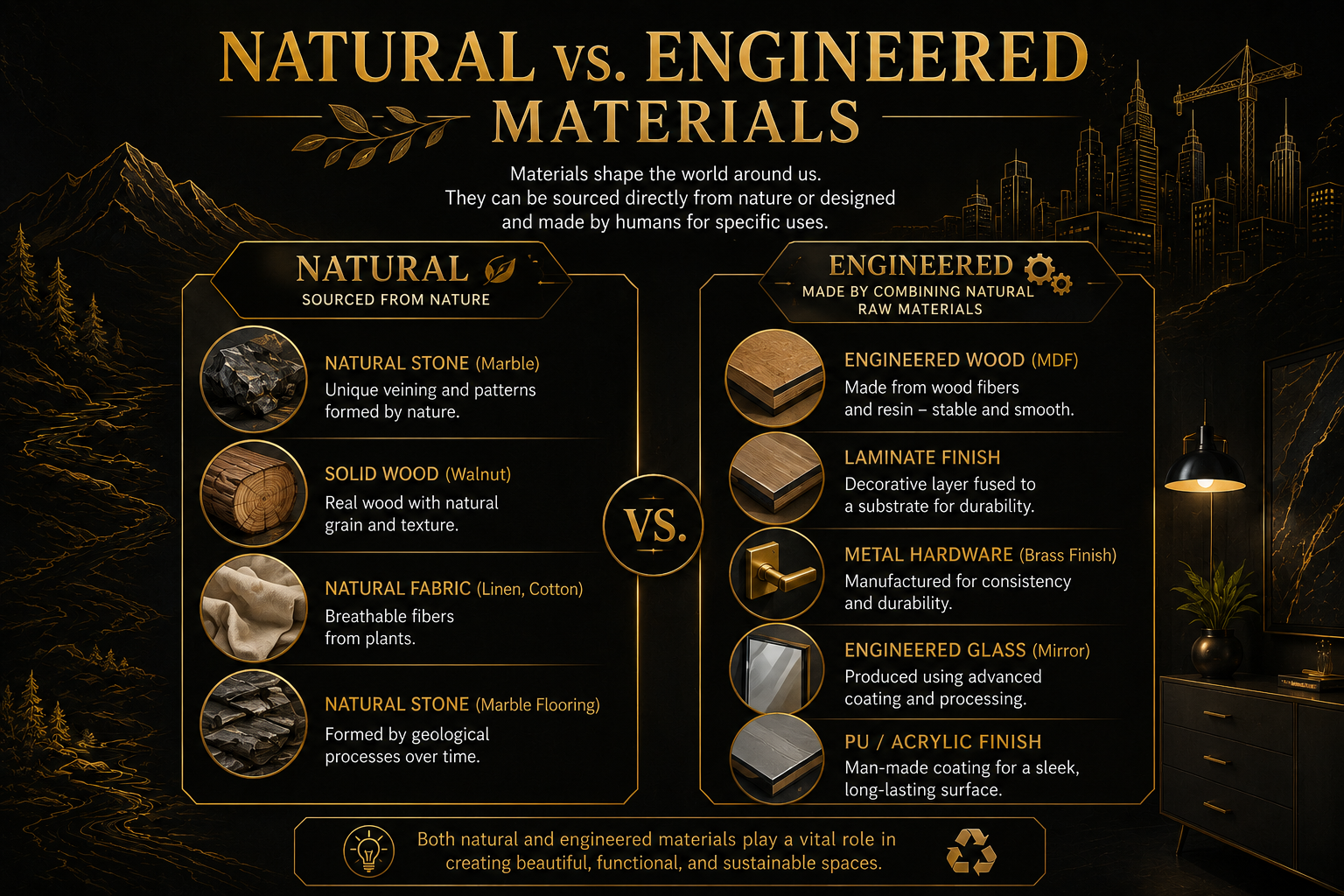
In almost every interior design project, the classic battle eventually comes down to Natural vs. Engineered Materials. On one side, Mother Nature offers her exquisite, one-of-a-kind, slightly imperfect beauty. On the other side, human ingenuity brings unparalleled durability, consistency, and resilience to the forefront. But which one is the ultimate winner for your luxury home?
Understanding this distinction is not just about aesthetics; it is a vital functional choice. Mistaking a natural material for an engineered one can lead to tragic and expensive mishaps—like placing a hot pan on a surface that scorches rather than handles the heat, or using a porous stone in a spill-prone area. The difference dictates your home’s maintenance levels, longevity, and overall vibe. Let’s carve out the truth and see which contender deserves the spotlight in your living room.
The Elegant Divas: Natural Materials
Let’s start with the originals. Natural materials are exactly what they sound like—elements sourced directly from the earth, minimally refined, and placed into your home. We are talking about solid teak wood, luxurious Italian marble, rich granite, pure leather, and organic wool.
The true luxury of natural materials lies in their beautiful imperfections. No two slabs of marble share the exact same veining; no two planks of walnut feature identical grain patterns. When you choose natural materials, you are investing in a piece of history and bringing the concept of ‘wabi-sabi’ (the profound beauty of imperfection) into your home. They lend an organic, warm, and timeless aesthetic to any room, offering a tactile and sensory experience that is incredibly hard to replicate.
However, natural materials are the “divas” of the interior design world. They demand your attention, respect, and constant care. They react to their environment—wood expands and contracts with Bangalore’s shifting monsoon humidity, and porous marble can easily stain if exposed to turmeric, oil, or red wine. While they can literally last for centuries if meticulously cared for, they require regular sealing, polishing, and TLC to maintain their pristine, luxurious look.
The Dependable Workhorses: Engineered Materials
Enter the modern challengers. Engineered materials are artificial or composite products meticulously designed to improve upon nature’s inherent flaws. Historically, designers looked at solid wood and loved its warmth but hated its tendency to warp. They admired natural stone but despised how easily it stained.
Engineered materials like plywood, MDF (Medium Density Fiberboard), quartz countertops, and porcelain tiles were created to solve these exact problems. Made by binding natural particles with resins, adhesives, and other binders under extreme high pressure, these materials are cooked up in high-tech factories to be stronger, straighter, and immensely more predictable than their wild counterparts.
These are the “workhorses” of your home. Engineered materials offer consistent, uniform, and sleek surfaces. Modern manufacturing has advanced to such a degree that these materials can flawlessly mimic the look and texture of natural wood or stone. If you have toddlers, pets, or a bustling, clumsy household, engineered materials are usually the safer, hassle-free bet that still looks like a million bucks.
The Head-to-Head Comparison
When weighing natural vs. engineered materials, it helps to see how they stack up against each other across key factors:
- Aesthetics: Natural materials offer unique, organic, and warm aesthetics that guarantee your home is one-of-a-kind. Engineered materials provide consistent, uniform looks that are perfect for sleek, contemporary designs, seamlessly mimicking natural textures.
- Durability: Natural materials are stunning but can be prone to scratches, stains, and warping over time. Engineered materials are specifically manufactured to resist moisture, heat, and daily wear-and-tear.
- Maintenance: If you want natural materials, be prepared for a high-maintenance relationship. They need periodic sealing and polishing. Engineered materials are incredibly low maintenance—just wipe them down with a damp cloth, and you are good to go.
- Price: Natural materials command a premium price tag due to their rarity, complex extraction, and the transportation of heavy logs or slabs. Engineered materials are generally moderate to affordable, though high-end engineered quartz can rival natural stone in price.
- Lifespan: A well-cared-for natural material can outlast you, and can be sanded down or refinished multiple times. Engineered materials have a very long lifespan but are often difficult or impossible to refinish once heavily damaged.
Where to Use What? A Room-by-Room Guide
At Luxosy Interior Bangalore, we firmly believe the suitability of a material depends entirely on the room’s function. Let’s break it down:
1. The Kitchen: This is where the hottest debate occurs. Natural granite is highly heat-resistant but porous, requiring regular sealing. Engineered quartz, however, is non-porous, resists stubborn stains from rich Indian spices, and requires zero maintenance. For busy families who love to cook, quartz is often the reigning champion. 2. Flooring: Solid hardwood flooring is the ultimate luxury dream for many, but engineered wood—which features a top layer of real wood bonded over stable cross-layered plywood—handles humidity fluctuations much better. Given Bangalore’s dynamic climate, engineered wood or high-quality porcelain tiles are practical, long-lasting choices. 3. The Bathroom: Water is the mortal enemy of natural wood. For bathroom vanities and wet areas, engineered materials like marine-grade plywood, acrylic finishes, and large-format porcelain tiles are your best friends, offering waterproof durability without sacrificing an ounce of style.
Sustainability and the Budget Equation
You might assume that natural materials are always more eco-friendly. However, chopping down rare timber from rainforests isn’t doing the global environment any favors. While natural materials are renewable (if responsibly sourced) and biodegradable, extracting and transporting heavy slabs is heavily resource-intensive.
On the flip side, engineered materials frequently utilize waste products—like wood chips for MDF or recycled stone dust for quartz. While this is fantastic for reducing landfill waste, it’s essential to look for low-VOC (Volatile Organic Compounds) certifications, as the resins and glues used can emit chemicals. If sustainability is your priority, the experts at Luxosy Interior Bangalore can guide you toward responsibly sourced natural woods or highly recycled engineered composites.
Budget-wise, natural materials cost more due to their exclusivity. Engineered materials offer steadier prices, but don’t assume “artificial” means cheap. Premium engineered materials deliver luxury performance that matches, and sometimes exceeds, their natural counterparts.
Common Mistakes to Avoid in Interior Design
Don’t be the homeowner who installs pristine white marble in a young child’s bathroom. Avoid these common design blunders:
- Ignoring Your Lifestyle: Choosing high-maintenance natural materials when you have a chaotic, busy lifestyle is a recipe for a permanent stain and endless frustration.
- Fearing the ‘Fake’: Don’t turn your nose up at engineered materials out of a desire for authenticity. Modern technology is astonishing—some engineered porcelain tiles look and feel more like rustic wood than actual wood does!
- Forgetting the Climate: Installing solid wood in areas prone to high moisture or fluctuating temperatures will lead to warping and cracking faster than you can imagine.
Pro Tip: Always insist on getting physical samples. Never pick a material based purely on a picture online. Touch it, feel its texture, and see how it interacts with the lighting in your specific space.
Conclusion: Budget, Beauty, or Both?
The great debate between natural and engineered materials isn’t about one being objectively better than the other; it’s about which one is better for you. Whether you crave the raw, historical beauty of nature or the refined, indestructible durability of modern engineering, your choice should seamlessly align with how you live in your home.
You don’t have to choose between budget and beauty—you can have it all! Often, the most breathtaking spaces we design at Luxosy Interior Bangalore feature a harmonious blend of both. We might pair a breathtaking natural marble accent wall with highly durable engineered wood floors, giving you the absolute best of both worlds.
Ready to roll up your sleeves and bring your vision to life? Let’s create your perfect blend of gorgeous natural charm and practical engineering. Contact Luxosy Interior Bangalore today for a consultation, and let our experts craft a luxurious, functional space tailored precisely to your unique lifestyle.